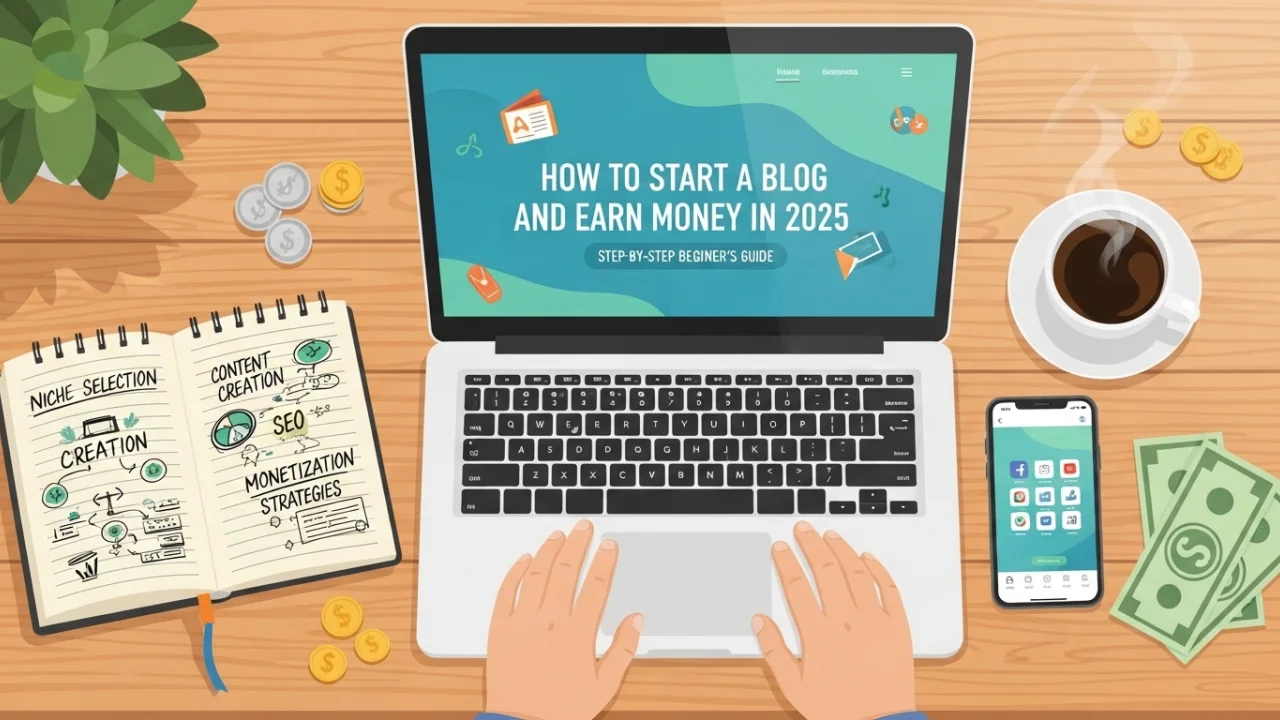

How to start a blog and Earn Money in 2026 — Step-by-Step Beginner’s Guide
Every month, millions of people search for ways to earn money online. And every month, blogging quietly keeps delivering results for those who do it right. While social media trends come and go, blogs have been generating consistent income for over two decades — and 2025 is no different.
The difference today is that starting a blog has never been easier, faster, or more affordable. With the right guidance, you can have your blog live within a single afternoon. The earning part takes longer — but it is absolutely real, and this guide will show you exactly how to get there.
Is Blogging Still Worth Starting in 2026?
This is the first question most beginners ask — and it is a fair one.
The honest answer is yes, but with one important condition. Blogging works in 2025 if you approach it as a long-term content business, not a get-rich-quick scheme. Blogs that publish genuinely helpful, well-researched content consistently still rank on Google, still attract loyal readers, and still generate significant income.
What no longer works is copying content, writing thin articles just to fill a website, or chasing every trend without a clear focus. Google has become smarter, readers have become more demanding, and the bloggers who succeed are those who treat their blog like a real business from day one.
If you are willing to do that — blogging in 2025 is one of the most rewarding online income paths available.
Step 1 — Choose Your Niche Carefully
Your niche is the specific topic your blog will focus on. This is the most important decision you will make as a blogger, and it deserves serious thought.
A good niche has three qualities. First, it is something you genuinely know about or are willing to learn deeply. Second, it has a real audience of people searching for information online. Third, it has monetization potential — meaning businesses are willing to pay to reach that audience.
Some niches that work consistently well include personal finance, health and wellness, technology and gadgets, travel, food and recipes, parenting, self-improvement, and digital marketing. Within each of these, there are hundreds of sub-niches where you can build a focused, authoritative blog.
Avoid the mistake of choosing a niche purely based on income potential. If you do not enjoy the topic, you will run out of motivation long before you start earning. Choose something you can write about consistently for at least two years.
Step 2 — Set Up Your Blog the Right Way
Setting up a blog today is straightforward. Here is what you need:
Domain Name — This is your blog’s address on the internet, like yourname.com. Choose something short, easy to remember, and relevant to your niche. Domain names typically cost $10 to $15 per year. Namecheap and GoDaddy are popular options.
Web Hosting — This is the service that keeps your blog live on the internet. For beginners, Hostinger, Bluehost, or SiteGround are reliable and affordable options starting at $2 to $5 per month.
WordPress — Almost every successful blogger uses WordPress. It is free, flexible, and powers over 40% of all websites on the internet. Most hosting providers offer one-click WordPress installation.
Theme — Your theme controls how your blog looks. Start with a free theme like Astra or GeneratePress. Both are fast, clean, and professional-looking without spending a single rupee or dollar.
Once these four things are in place, your blog is technically ready. Total setup cost for a beginner: approximately $30 to $50 for the first year.
Step 3 — Create Content That Actually Ranks on Google
Having a blog means nothing if nobody reads it. The way people find your blog is through Google — and the way Google sends people to your blog is through SEO, which stands for Search Engine Optimization.
SEO sounds technical but the basics are simple. Write articles about topics people are actively searching for. Use free tools like Google Keyword Planner or Ubersuggest to find what your target audience is typing into Google. Write articles that answer those questions better than any existing result on the first page.
Every article you publish should follow a clear structure. Start with an introduction that hooks the reader immediately. Use clear subheadings so readers can scan the content easily. Include real examples, practical tips, and actionable advice. End with a strong conclusion and a call to action.
Your first 20 articles are the foundation of your blog. Take time with each one. Research properly. Write genuinely useful content. Do not rush this stage — the quality of your foundation determines everything that follows.
Step 4 — Grow Your Blog Traffic Consistently
Content alone is not enough. You also need to actively promote your blog in the early months before Google starts ranking your articles.
Pinterest is one of the most underrated traffic sources for new bloggers. Creating pin images for each article and posting consistently on Pinterest can drive thousands of visitors per month even to a brand new blog.
Building an email list from day one is another strategy that separates serious bloggers from casual ones. Offer a free resource — a checklist, a short guide, or a template — in exchange for your reader’s email address. An email list gives you a direct connection to your audience that does not depend on any algorithm.
Social media can also support your growth. Choose one platform where your target audience spends time and be consistent there. Do not try to be everywhere at once.
Step 5 — Monetize Your Blog and Start Earning
This is the part everyone wants to reach. The good news is there are multiple ways to earn money from a blog, and most bloggers use a combination of several.
Google AdSense is the most common starting point. Once your blog is approved, Google places ads on your articles and pays you every time a reader clicks on them. Income from AdSense starts small but grows steadily as your traffic increases.
Affiliate Marketing is where most bloggers earn their biggest income. You recommend products or services in your articles using a special link. When a reader clicks your link and makes a purchase, you earn a commission. Amazon Associates, ShareASale, and Impact are popular affiliate networks with thousands of products to promote.
Sponsored Posts become available once your blog has an established audience. Brands pay you to write articles featuring their products. Rates range from $50 for small blogs to several thousand dollars for established ones.
Selling Digital Products is the highest-margin income stream. Create an ebook, a course, a template pack, or a workshop related to your niche and sell it directly to your readers. Once created, digital products can sell indefinitely with no additional effort.
Real Story — How Arjun Built a $800 Monthly Blog Income
Arjun, a 28-year-old software engineer from Hyderabad, started a personal finance blog in early 2023 as a side project. He published two articles per week consistently for 12 months while keeping his full-time job.
By month eight, his blog was receiving 12,000 monthly visitors. Google AdSense was earning him $150 per month. Affiliate commissions from financial products added another $400. A single sponsored post that month brought in $250.
Total: $800 in one month from a blog he started with less than $50.
Today Arjun publishes less frequently but earns more because his older articles continue ranking and generating income. His blog has become a genuine asset that earns money while he sleeps.
This is not a fantasy. This is what consistent, quality blogging produces over time.
How Long Does It Take to Earn Money from Blogging?
Being honest here is important. Most bloggers see their first meaningful income between month six and month twelve. Full-time income — enough to replace a salary — typically takes two to three years of consistent effort.
Anyone promising you blog income in 30 days is either selling something or exaggerating. Real blogging income is slow at first and then accelerates significantly once Google trusts your website and your audience grows.
The bloggers who quit after three months never discover what months twelve and twenty-four look like. The ones who stay consistent almost always find a way to make it work.
Conclusion — Your Blog is a Business. Treat It Like One.
Starting a blog is easy. Building one that earns consistent income requires patience, consistency, and a genuine commitment to helping your readers.
Choose your niche thoughtfully. Set up your blog properly. Write content that truly serves your audience. Promote it actively. Monetize strategically. And above all — do not quit when the early months feel slow.
The bloggers earning $2,000, $5,000, and $10,000 per month today were once exactly where you are right now — at the beginning, with nothing but a domain name and a decision to start.
Make that decision today.
FAQ — Frequently Asked Questions
Q1. How much does it cost to start a blog in 2025?
You can start a professional blog for as little as $30 to $50 for your first year. This covers domain registration and basic hosting. WordPress itself is completely free. Avoid spending money on expensive themes or plugins when you are just starting out.
Q2. Do I need technical knowledge to start a blog?
No technical background is required. WordPress is beginner-friendly and most hosting providers offer one-click installation. If you can use email and browse the internet, you have enough technical skill to start a blog today.
Q3. How many articles do I need before applying for Google AdSense?
Google does not specify an exact number but most successful applicants have at least 15 to 25 well-written, original articles published before applying. Quality matters far more than quantity. Thin or copied content will result in rejection regardless of how many articles you have.
Q4. Can I start a blog and keep my full-time job?
Absolutely — and this is actually the recommended approach. Most successful bloggers started as a side project while maintaining their regular income. This removes financial pressure and gives you the freedom to build your blog properly without desperation.
Q5. Which blogging niche makes the most money?
Personal finance, health, technology, and digital marketing consistently generate the highest blog income because advertisers pay more to reach these audiences. However, the best niche for you is one where you have genuine knowledge and interest — passion and expertise always outperform pure profit chasing.
Q6. Is blogging passive income?
Blogging is not truly passive in the beginning — it requires significant active effort to build. However, once your articles are ranking on Google and your monetization is set up, older content continues earning without constant attention. This is what makes blogging genuinely rewarding over the long term.
Q7. What is the biggest mistake new bloggers make?
Quitting too early is the single biggest mistake. Most bloggers give up between months three and six — right before the point where growth typically begins to accelerate. Consistency over time is the only real secret to blogging success.
